
Heart Age Calculator
Calculate your cardiovascular health age instantly. Find out if your heart is older or younger than your actual age and get personalized tips to improve your heart health today!
🫀 Enter Your Health Details
How the Heart Age Calculator Works
Step 1
Enter your health details — age, BP, cholesterol, BMI and lifestyle factors
Step 2
Our algorithm calculates your cardiovascular risk score
Step 3
See your heart age compared to your actual age
Step 4
Get personalized tips to reduce your heart age
Why Use Heart Age Calculator
Know Your Heart Age
Find out if your cardiovascular system is aging faster or slower than your actual biological age
Risk Factor Analysis
See which specific factors — BP, cholesterol, smoking, weight — are aging your heart the most
Personalized Tips
Get actionable heart health recommendations tailored specifically to your individual risk profile
Prevention Focus
Heart disease is largely preventable — knowing your heart age motivates positive lifestyle changes
100% Private
Your health data never leaves your browser — all calculations happen locally with zero data storage
Mobile Friendly
Works perfectly on all devices — phone, tablet and desktop with instant results
Your heart may be older than you think — or younger. Heart age, also known as cardiovascular age, is a measure of how old your heart and blood vessels are based on your current health status and risk factors rather than your actual birthday. Research published by the Centers for Disease Control and Prevention (CDC) found that approximately 3 in 4 adults in the United States have a heart age older than their actual age — by an average of 7 years. Understanding your heart age is one of the most powerful motivators for making heart-healthy lifestyle changes before cardiovascular disease occurs.
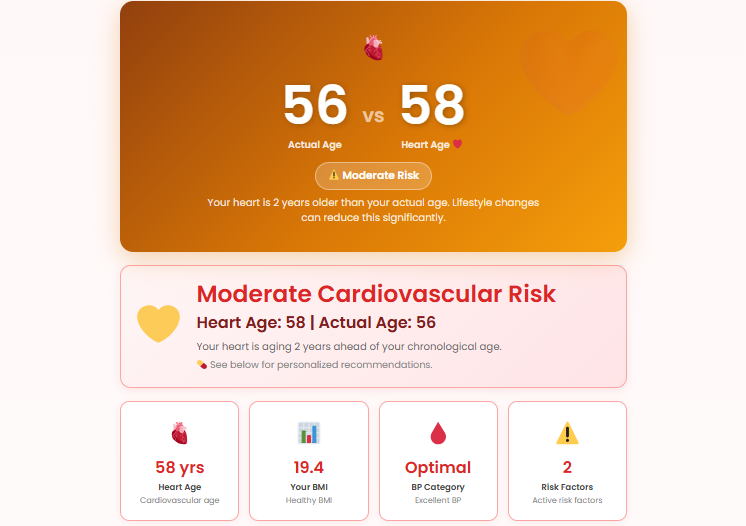
What Is Heart Age?
Heart age — also called cardiovascular age — is the age your heart appears to be based on your individual cardiovascular risk factors. It is calculated using scientifically validated algorithms derived from long-term population health studies including the landmark Framingham Heart Study. A 45-year-old person with high blood pressure, high cholesterol, and a smoking habit may have a heart age of 60 — meaning their cardiovascular system is aging as fast as the average 60-year-old's. Conversely, a fit and healthy 50-year-old may have a heart age of 42 — indicating exceptional cardiovascular health.
Key Factors That Age Your Heart
Several modifiable risk factors directly accelerate cardiovascular aging. High blood pressure (hypertension) forces your heart to work harder with every beat, thickening the heart muscle and stiffening arterial walls. Studies show that sustained systolic pressure above 140 mmHg can add 5 to 10 years to your heart age. High total cholesterol — particularly elevated LDL — builds up as plaque in arterial walls, reducing blood flow and increasing heart attack risk. Smoking damages the endothelial lining of blood vessels, causes inflammation, reduces oxygen delivery to the heart muscle, and is one of the most powerful accelerators of cardiovascular aging.
Excess body weight, particularly abdominal obesity, increases inflammation, raises blood pressure, elevates cholesterol, and promotes insulin resistance — all of which contribute to cardiovascular aging. Physical inactivity is itself an independent risk factor — sedentary people have up to 35 percent higher risk of cardiovascular events than those who exercise regularly. Diabetes doubles the risk of heart disease and accelerates arterial aging significantly. Family history of heart disease in a first-degree relative before age 60 indicates elevated genetic risk.
❤️ Younger Heart Age
Normal blood pressure, healthy cholesterol, non-smoker, healthy BMI, regular exercise, no diabetes, no family history. Heart beats efficiently for decades.
💔 Older Heart Age
High BP, elevated cholesterol, smoking, obesity, sedentary lifestyle, diabetes. Each factor adds years to cardiovascular age — often without symptoms.
How to Reduce Your Heart Age
The most powerful heart age reducer is quitting smoking — studies show that stopping smoking reduces cardiovascular risk to near-non-smoker levels within 5 years and immediately begins reversing arterial damage. Lowering blood pressure through diet (reducing sodium, increasing potassium through fruits and vegetables), exercise, and when necessary medication, can reduce heart age by up to 5 years. Achieving and maintaining a healthy BMI through balanced nutrition and regular physical activity addresses multiple risk factors simultaneously.
Regular aerobic exercise — 150 minutes of moderate activity per week as recommended by the American Heart Association — strengthens the heart muscle, lowers resting heart rate, reduces blood pressure, improves cholesterol ratios, reduces inflammation, and is one of the most effective interventions for reducing cardiovascular age. Even walking 30 minutes per day five days per week produces measurable improvements in heart age within weeks.
Blood Pressure and Your Heart Age
Blood pressure is perhaps the single most impactful modifiable risk factor for heart age. Normal blood pressure is defined as below 120 mmHg systolic. Elevated blood pressure (120-129) begins to stress arterial walls. Stage 1 hypertension (130-139) significantly increases cardiovascular risk and heart age. Stage 2 hypertension (140+) is a medical emergency for long-term heart health and adds the most years to cardiovascular age of any single measurable factor.
When to See a Doctor
If your heart age calculation shows your cardiovascular age is significantly higher than your actual age — particularly by more than 5 years — this is a strong signal to schedule a comprehensive cardiovascular health assessment with your doctor. A blood panel measuring LDL, HDL, triglycerides, blood glucose, and inflammatory markers combined with blood pressure monitoring gives your physician the full picture needed to create a personalized heart health plan. Our Heart Age Calculator is an educational tool designed to raise awareness — not to replace clinical assessment.
Frequently Asked Questions
Everything you need to know about Heart Age Calculator & Cardiovascular Age
What is heart age and how is it calculated?
Heart age — also called cardiovascular age — is how old your heart and blood vessels appear to be based on your health risk factors rather than your actual age. It is calculated using algorithms derived from major cardiovascular studies including the Framingham Heart Study. Risk factors including blood pressure, cholesterol, smoking, BMI, diabetes, exercise level, and family history are weighted and combined to estimate your cardiovascular biological age.
What is a normal or healthy heart age?
A healthy heart age is equal to or lower than your actual chronological age. If you are 45 years old and your heart age is 42, that means your cardiovascular system is functioning better than average for your age group. If your heart age equals your actual age, you have average cardiovascular risk. A heart age significantly higher than your actual age indicates elevated cardiovascular risk requiring attention.
Can I reduce my heart age?
Yes — heart age is largely reversible through lifestyle changes. Quitting smoking can reduce heart age by up to 5 to 10 years within years of stopping. Lowering blood pressure, achieving a healthy BMI, controlling cholesterol through diet and exercise, managing diabetes, and increasing physical activity all directly reduce cardiovascular age. Many people reduce their heart age by 5 to 15 years through sustained lifestyle improvement.
What blood pressure should I enter in the calculator?
Enter your systolic blood pressure — the top number of your blood pressure reading. For example if your reading is 130/85, enter 130. If you do not know your blood pressure, use an average reading of 120 mmHg which represents optimal blood pressure. However for the most accurate result we recommend checking your blood pressure at a pharmacy or clinic before using the calculator.
What cholesterol level should I enter?
Enter your total cholesterol in mg/dL from your most recent blood test. Desirable total cholesterol is below 200 mg/dL. Borderline high is 200 to 239 mg/dL. High cholesterol is 240 mg/dL and above. If you do not know your cholesterol, consult your doctor for a blood panel — knowing your cholesterol is an essential part of cardiovascular health awareness.
Is this heart age calculator medically accurate?
Our Heart Age Calculator uses validated cardiovascular risk factors based on established medical research to provide an educational estimate of cardiovascular age. It is designed to raise awareness and motivate healthy lifestyle changes. However it is an educational tool — not a medical diagnostic device. For clinical cardiovascular assessment, always consult a qualified healthcare provider who can review your complete medical history.
Is my health data private and secure?
Yes — completely private. All calculations in our Heart Age Calculator happen entirely within your browser using JavaScript. Your health data — age, blood pressure, cholesterol, weight, and all other inputs — is never sent to any server, never stored, and never shared with any third party. The calculator works offline once loaded.
How often should I calculate my heart age?
We recommend recalculating your heart age every 3 to 6 months, especially if you are making lifestyle changes such as quitting smoking, losing weight, increasing exercise, or starting blood pressure medication. Tracking your heart age over time is a powerful way to see the measurable impact of your healthy lifestyle changes and stay motivated.
Is this heart age calculator free to use?
Yes, completely free. No registration required, no hidden charges, and no premium version needed. Use our Heart Age Calculator and cardiovascular health age tool unlimited times with complete privacy and instant results.