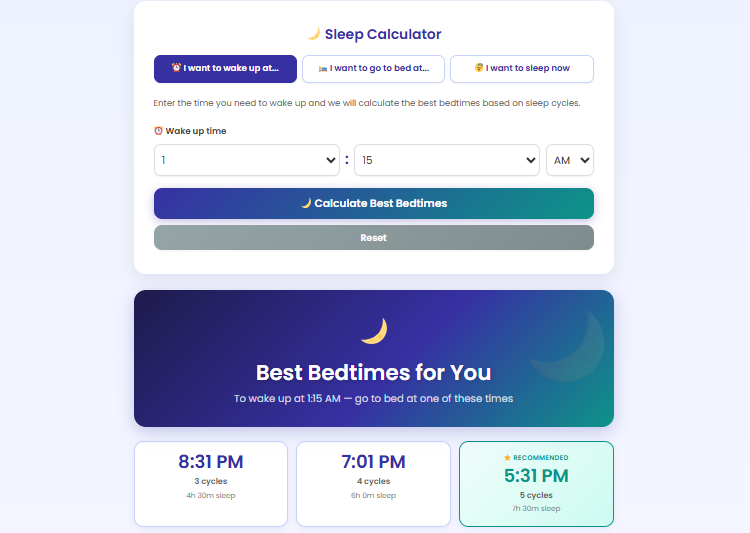
Sleep Calculator
Calculate the best time to sleep or wake up based on 90-minute sleep cycles for optimal rest.
When should I go to bed?
When should I wake up?
Based on 90-minute sleep cycles, these times help you wake up between sleep stages for better rest.
How It Works
Step 1
Choose your mode: wake time or bedtime calculator
Step 2
Enter your desired wake up time or sleep time
Step 3
Select how long it takes you to fall asleep
Step 4
Get 4 optimal times based on 90-minute sleep cycles
Use Cases (Who Can Use It?)
Students
Optimize sleep before exams and classes to improve focus and memory retention
Working Professionals
Plan sleep schedules around work shifts, meetings, and important presentations
Parents
Create healthy sleep routines for children and coordinate family schedules
Travelers
Adjust to new time zones and beat jet lag with smart sleep timing
Shift Workers
Plan sleep around irregular work hours and night shifts effectively
Athletes & Fitness Enthusiasts
Maximize recovery and performance with optimal sleep cycle timing
Insomnia Sufferers
Develop consistent sleep patterns and improve sleep quality over time
Health & Wellness Coaches
Recommend science-based sleep schedules to clients for better wellbeing
Months of the Year & Recommended Sleep Hours
| Month Name | Recommended Sleep Hours |
|---|---|
| January | 7–9 hrs |
| February | 7–9 hrs |
| March | 7–8 hrs |
| April | 7–8 hrs |
| May | 7–8 hrs |
| June | 7 hrs |
| July | 7 hrs |
| August | 7 hrs |
| September | 7–8 hrs |
| October | 7–8 hrs |
| November | 7–9 hrs |
| December | 7–9 hrs |
Understanding Your Sleep Cycles
Sleep isn’t just about closing your eyes for a few hours. It’s a carefully orchestrated process where your brain and body recharge, repair, and prepare for the next day. Think of it like charging your phone—if you interrupt the charging cycle at the wrong moment or don’t charge it fully, performance suffers. The same principle applies to your sleep.
When you sleep at the right times and wake up at the end of a complete sleep cycle, you feel refreshed, alert, and energized. But when you wake up in the middle of a deep sleep stage, even after getting plenty of hours, you can feel groggy, confused, and tired throughout the day. This phenomenon explains why sometimes sleeping 6 hours feels better than sleeping 8 hours—it’s all about timing.
That’s exactly why we created this Sleep Calculator. It takes the guesswork out of sleep timing and helps you discover your optimal bedtime and wake-up time based on proven sleep science.
What Is a Sleep Calculator?
A sleep calculator is a science-based tool that calculates the best times for you to fall asleep or wake up based on natural sleep cycle patterns. Unlike a simple alarm clock that just wakes you at a set time, this calculator works with your body’s biology to suggest times that align with your natural sleep architecture.
Every night, your brain cycles through distinct stages of sleep, each serving a crucial purpose:
Light Sleep is when you’re dozing off and can be easily awakened. Your body temperature drops, heart rate slows, and your brain begins to relax. This stage makes up about 50% of your total sleep time.
Deep Sleep is the most restorative phase where your body repairs tissues, builds bone and muscle, and strengthens your immune system. This is also when growth hormone is released. Waking during deep sleep is what causes that disoriented, groggy feeling.
REM Sleep (Rapid Eye Movement) is when most dreaming occurs. This stage is vital for memory consolidation, emotional processing, and brain development. Your brain is nearly as active during REM sleep as when you’re awake.
These three stages combine to create one complete sleep cycle, which typically lasts about 90 minutes. Throughout the night, you go through 4-6 complete cycles, with each cycle containing varying amounts of each sleep stage. Understanding this pattern is key to waking up feeling refreshed rather than exhausted.
For a deeper dive into how these cycles work and why they matter, check out our comprehensive guide on the 90-minute sleep cycle.
How This Sleep Calculator Actually Works
Our calculator uses a straightforward approach based on sleep cycle science. Here’s the step-by-step process:
Step One: Choose Your Mode
Decide whether you know when you need to wake up (and need to calculate bedtimes) or when you’re going to bed (and need to calculate wake times). This flexibility makes the calculator useful for both morning people planning their evening and night owls trying to figure out their morning.
Step Two: Enter Your Time
Input your target wake-up time or planned bedtime. The calculator uses this as the anchor point for all calculations.
Step Three: Account for Sleep Latency
Sleep latency is the medical term for how long it takes you to fall asleep after you get into bed. Most people take about 10-20 minutes, but this varies. The calculator lets you adjust this setting so the recommendations account for your personal falling-asleep time.
Step Four: Review Your Options
The calculator provides multiple sleep time options based on completing different numbers of full 90-minute cycles. You’ll see 4 different recommendations, typically ranging from 4.5 hours (3 cycles) to 9 hours (6 cycles) of sleep.
Example in Action:
Let’s say you need to wake up at 7:00 AM and it takes you about 15 minutes to fall asleep. The calculator works backward:
- For 7.5 hours (5 cycles): Go to bed at 11:15 PM
- For 9 hours (6 cycles): Go to bed at 9:45 PM
The calculator handles all the math instantly, including the tricky part of accounting for your fall-asleep time, so you get accurate results without pulling out a calculator or counting on your fingers.
How Much Sleep Do You Really Need?
Sleep requirements aren’t one-size-fits-all. They change throughout your life and vary from person to person based on genetics, lifestyle, health conditions, and daily stress levels.
Children (6-12 years) need the most sleep—between 9 and 12 hours per night. Their brains are developing rapidly, and sleep plays a crucial role in learning, memory formation, and growth. Kids who don’t get enough sleep often struggle with attention, behavior, and learning.
Teenagers (13-18 years) require 8-10 hours of sleep. During adolescence, natural circadian rhythms shift, making teens naturally want to stay up later and sleep in longer. Unfortunately, early school start times often conflict with this biological need, leading to chronic sleep deprivation among teenagers.
Adults (18+ years) generally need 7-9 hours of sleep per night. While individual needs vary, consistently getting less than 7 hours can increase risk of health problems including obesity, diabetes, cardiovascular disease, and weakened immune function.
Older Adults (65+ years) also need 7-8 hours, though sleep patterns often change with age. Older adults may wake more frequently during the night and spend less time in deep sleep, but the total amount of sleep needed doesn’t decrease as much as people think.
Getting adequate sleep does more than just make you feel less tired. Quality sleep strengthens memory and learning, supports immune function, regulates hormones, repairs tissues, stabilizes mood, and even helps maintain a healthy weight. Chronic sleep deprivation has been linked to increased risk of accidents, poor decision-making, and long-term health problems.
For age-specific recommendations and detailed breakdowns of sleep needs at every life stage, visit our guide on how much sleep do I need.
Finding Your Perfect Wake-Up Time
The ideal wake-up time isn’t just about getting enough hours—it’s about waking at the right point in your sleep cycle. Your goal is to wake up during light sleep at the end of a cycle, not in the middle of deep or REM sleep.
When you wake during light sleep, you feel alert and ready to start your day. But when an alarm jolts you awake during deep sleep, you experience what scientists call “sleep inertia”—that groggy, disoriented feeling that can last from a few minutes to over an hour.
Key principles for optimal wake times:
Consistency is crucial. Your body has an internal biological clock called the circadian rhythm that regulates sleep-wake cycles. When you wake up at the same time every day—yes, even on weekends—you train your circadian rhythm to naturally promote wakefulness at that time. This makes waking up easier and helps you fall asleep more easily at night.
Match your wake time to your sleep cycles. Plan your bedtime so that you complete 4-6 full 90-minute cycles before your alarm goes off. This ensures you’re waking between cycles rather than in the middle of one.
Give yourself a buffer. If you know you need to be functional by 7:00 AM, consider setting your wake time for 6:30 AM or even 6:00 AM. This gives you time to move through any residual grogginess and be at peak alertness when you need it.
Watch for natural wake signals. If you consistently wake up a few minutes before your alarm, that’s your body telling you it’s naturally completing a sleep cycle. This is actually ideal—it means your sleep timing is well-aligned with your circadian rhythm.
Want to calculate your specific optimal wake-up time based on when you go to bed? Try our dedicated best time to wake up calculator for personalized recommendations.
Practical Sleep Tips for Better Rest
Knowing the right time to sleep and wake is only part of the equation. Creating an environment and routine that supports quality sleep is equally important.
Maintain a Consistent Schedule
Go to bed and wake up at the same time every day, including weekends. This consistency reinforces your circadian rhythm and makes falling asleep and waking up naturally much easier. Even if you had a late night, try to wake at your regular time—you can recover with an earlier bedtime the next night.
Optimize Your Sleep Environment
Your bedroom should be cool (around 65-68°F or 18-20°C), completely dark, and as quiet as possible. Consider blackout curtains, a white noise machine, or earplugs if needed. Remove or cover any lights from electronics, as even small amounts of light can interfere with melatonin production.
Implement a Digital Sunset
Stop using phones, tablets, computers, and TVs at least 30-60 minutes before bed. The blue light from screens suppresses melatonin production, the hormone that makes you sleepy. If you must use devices, enable night mode or use blue light filtering glasses.
Be Strategic About Caffeine
Caffeine has a half-life of about 5-6 hours, meaning half of it is still in your system that long after consumption. Avoid caffeine after 2:00 PM if you plan to sleep at 10:00 PM. Remember that caffeine isn’t just in coffee—it’s also in tea, chocolate, soda, and some medications.
Create a Wind-Down Routine
Develop a relaxing pre-sleep routine that signals to your brain it’s time to rest. This might include reading a physical book, taking a warm bath, practicing gentle stretches or meditation, listening to calming music, or writing in a journal. Whatever activities you choose, do them in the same order each night to create a strong sleep association.
Watch Your Evening Eating and Drinking
Avoid large meals within 2-3 hours of bedtime, as digestion can interfere with sleep. Stay hydrated during the day, but reduce fluid intake in the evening to minimize nighttime bathroom trips. If you drink alcohol, know that while it might help you fall asleep faster, it significantly disrupts sleep quality and REM sleep later in the night.
Get Morning Light Exposure
Expose yourself to bright light, ideally natural sunlight, within the first hour of waking. This helps set your circadian rhythm and promotes alertness during the day and better sleep at night. If you wake before sunrise, consider using a bright light therapy lamp.
Exercise Regularly, But Time It Right
Regular physical activity improves sleep quality, but exercising too close to bedtime can be stimulating and make it harder to fall asleep. Aim to finish moderate to vigorous exercise at least 3 hours before bed. Gentle activities like yoga or stretching are fine closer to bedtime.
Why This Sleep Calculator Is Different
Most basic sleep calculators online simply multiply 90 minutes by a number of cycles and give you a single time. That approach ignores the reality that falling asleep isn’t instantaneous and that different people have different sleep needs.
Our calculator is designed with flexibility and real-world practicality in mind. You can adjust for your personal sleep latency—whether you fall asleep in 5 minutes or need 30 minutes to drift off. This ensures the recommendations actually work for your body, not just in theory.
The calculator provides multiple options rather than a single “perfect” time. Sleep needs vary day to day based on stress, activity level, and health. Having 4 different timing options lets you choose based on how you’re feeling and how much time you have available.
We include educational resources and explanations throughout, helping you understand why the calculator makes specific recommendations. This isn’t just about following orders—it’s about understanding your sleep so you can make informed decisions.
The calculator works bidirectionally, meaning you can plan from either direction—bedtime to wake time or wake time to bedtime. This makes it practical for both scheduled mornings (like work or school) and spontaneous sleep timing decisions.
It’s completely free to use with no registration, downloads, or subscriptions required. No data is collected or stored—your sleep schedule is your private business.
Sleep Science Matters
The sleep recommendations in this calculator aren’t arbitrary—they’re based on decades of sleep research conducted by scientists studying circadian biology, sleep architecture, and human performance.
The 90-minute sleep cycle framework was established through polysomnography studies that track brain waves, eye movements, and muscle activity during sleep. While individual cycles can vary from 70 to 110 minutes, 90 minutes is the average for most adults, making it a reliable baseline for calculations.
The importance of waking between cycles rather than during them has been validated through countless studies showing that sleep inertia—that groggy feeling upon waking—is significantly worse when waking during deep sleep stages compared to waking during light sleep or REM.
Sleep deprivation research has demonstrated that chronic insufficient sleep (less than 6-7 hours regularly) leads to cumulative deficits in cognitive performance, emotional regulation, and physical health. You can’t simply “catch up” on missed sleep—consistency is more important than occasionally sleeping in.
Understanding and respecting these biological realities is the foundation of good sleep hygiene. This calculator exists to help you work with your biology, not against it.
Taking Control of Your Sleep
Sleep is one of the most powerful tools you have for maintaining health, performance, and wellbeing—yet it’s often the first thing people sacrifice when life gets busy. By using this sleep calculator and implementing the strategies we’ve discussed, you’re taking a proactive approach to one of the most important aspects of health.
Start by using the calculator to find your ideal sleep schedule. Experiment with the different cycle options and see which timing makes you feel most refreshed. Remember that it may take a few days to a week for your body to adjust to a new sleep schedule, so give yourself time before deciding if a particular timing works for you.
Pay attention to how you feel during the day. True sleep success isn’t measured by the number on a clock—it’s measured by how energized, focused, and emotionally balanced you feel throughout your waking hours. If you’re sleeping 8 hours but still feeling tired, the timing might be off, or there might be sleep quality issues to address.
Be patient with yourself. Building new sleep habits takes time, and there will be nights when life interferes with your perfect schedule. That’s normal. The goal isn’t perfection—it’s progress toward better, more consistent sleep that supports your overall health and daily performance.
Your brain and body work tirelessly while you sleep, performing maintenance tasks that can’t be done while you’re awake. Give them the time they need to do this important work, at the right times, and you’ll see improvements not just in how you feel when you wake up, but in every aspect of your daily life.
FAQs
Quick answers to the most common questions about our sleep calculator.
How long is a sleep cycle?
A typical sleep cycle lasts about 90 minutes for most people, though it can range from 70 to 110 minutes depending on individual factors. Our calculator uses the 90-minute average as the standard baseline for recommendations.
How many sleep cycles should I get each night?
Adults should aim for 4 to 6 complete sleep cycles per night, which equals approximately 6 to 9 hours of sleep. The sweet spot for most people is 5 cycles (7.5 hours) or 6 cycles (9 hours).
Is 6 hours of sleep enough?
For most adults, no. While 6 hours (4 cycles) can work occasionally, consistently getting only 6 hours can lead to sleep debt and health issues. The recommended amount is 7-9 hours for optimal health and performance.
What if I can't fall asleep quickly?
Use the fall asleep time selector in the calculator to adjust for your sleep latency. If you typically take 30 minutes or more to fall asleep, select that option and the calculator will account for it in your recommended times.
Can I use this calculator for naps?
Yes! For a quick power nap, aim for 20-30 minutes to stay in light sleep. For a more restorative nap, go for one full 90-minute cycle. Avoid napping for 45-60 minutes as you'll likely wake during deep sleep and feel groggy.
What is the healthiest bedtime?
There's no single perfect bedtime for everyone. The healthiest bedtime depends on when you need to wake up and your natural circadian rhythm. Most sleep experts recommend going to bed between 9 PM and midnight for optimal sleep quality.
Why do I feel worse after sleeping more?
You likely woke up in the middle of a sleep cycle, particularly during deep sleep. This causes sleep inertia—that groggy, disoriented feeling. It's better to sleep 7.5 hours and wake between cycles than sleep 8 hours and wake during deep sleep.
Does this calculator work for teenagers and kids?
Yes, it works for all ages, but remember that children and teenagers need more sleep than adults. Kids (6-12) need 9-12 hours, and teens (13-18) need 8-10 hours. Adjust your cycle count accordingly for younger users.
Should I keep the same sleep schedule on weekends?
Yes, consistency is key for quality sleep. Going to bed and waking up at the same time every day—including weekends—helps regulate your circadian rhythm and makes falling asleep and waking up easier naturally.
Is this sleep calculator free to use?
Yes, completely free. No registration required, no downloads needed, and no hidden costs. Use it as many times as you want on any device—desktop, tablet, or mobile.
Updated: January 31, 2026
👤 About the Author
Emma Carter — Founder of Easy Age Calculator. After extensive research on age calculation methods, Emma created this tool with one clear goal: to make it simple, accurate, and enjoyable for everyone. The calculator is designed so people can not only find their exact age with ease, but also have fun exploring it in different ways. Her focus has always been on building tools that are trustworthy, user-friendly, and genuinely helpful.
Visit Emma’s Founder Page →Research
“Samsung Galaxy Watch tracks sleep using motion, temperature, and sensor data to measure quality and duration.” — Android Authority, August 11, 2025 (Andy Walker)
“Sleep score (1–100) reflects total sleep time, cycles, interruptions, and both physical & mental recovery.” — Android Authority, August 11, 2025 (Andy Walker)
“Ideal sleep: 6–9 hours nightly with 3–7 full cycles for optimal rest.” — Android Authority, August 11, 2025 (Andy Walker)
“Data is for wellness insights only — not for diagnosis — but helps spot trends and improve habits.” — Android Authority, August 11, 2025 (Andy Walker)
0
Users Worldwide
0%
Accurate & Trusted Results
0
Data Saved or Shared
⭐ What Sleep Calculator Users Are Saying
“I finally know exactly how much sleep I need. Woke up feeling fresh!”
— Ahmed K.
“The 90-minute sleep cycle advice works perfectly. No more groggy mornings!”
— Fatima L.
“Helps me pick the best time to wake up and feel energized all day.”
— Sara M.